In this article, Isara Cotton explores how the 2026 IWD theme Give to Gain invites a more modern conversation about inclusion – one that moves beyond individual capability and into the structural, human and leadership conditions that shape sustainable performance across the asset finance industry. The views expressed here are the author’s own and do not necessarily reflect those of Lombard or NatWest Group.
Every year, International Women’s Day gives us a moment to pause, reflect and consider not only how far we’ve come but what meaningful progress now requires. Over the last decade, the themes of IWD have shifted noticeably – from Inspire Inclusion to Accelerate Action and this year, to Give to Gain. That progression reflects a wider transition in how many of us think about inclusion. What once centred on awareness, confidence-building and encouraging women to ‘step in’ now increasingly focuses on outcomes, structural accountability and the conditions in which people are genuinely able to thrive.
For me, Give to Gain is not a slogan about generosity; it’s a recognition that what we give – clarity, fairness, psychological safety, modernised roles – ultimately strengthens the whole system. It’s also a reminder that the blend of human understanding and sound commercial judgement is no longer a ‘nice-to-have’ leadership trait but a fundamental part of how we create environments where people can contribute sustainably and fully.
Earlier in my career, inclusion work focused heavily on helping women develop specific skills: navigating difficult conversations, speaking up, building resilience. Those things still matter. But they don’t address the full picture. Over time, it becomes impossible to ignore how much of people’s experience is influenced not by personal capability but by the structures surrounding them – the assumptions built into job design, the norms embedded in team cultures, the informal expectations around availability, tone, confidence and how leadership should ‘look’.
In that sense, IWD has played a helpful role. It has opened doors to conversations that might not otherwise happen and brought nuance into the open. The double bind, for example – the tension many women feel between being seen as commercially credible and being seen as likeable or ‘not too much’ – is still very present. It appears quietly in feedback about communication styles, in assumptions about confidence and in how people are interpreted within commercial settings. These are not individual shortcomings; they are cultural patterns.
And outside the workplace, many women still carry the anticipatory labour required to keep households functioning – a mental load that is hard to quantify yet deeply impactful. It influences energy levels, availability and emotional capacity and it shapes how people show up in their working day. No amount of surface-level flexibility will undo that unless deeper structural considerations shift too and this is just one lens/example! There are so many others.
This is where leadership has to stretch. Policies and guidance matter but they are only effective when they are met with real understanding of the person in front of us, alongside clarity about the role they hold. Leaders have a responsibility to understand what someone is navigating, how that reasonably affects their work and to approach these conversations with honesty, kindness and realism. There is nothing uncommercial about being clear – in fact, clarity is one of the most respectful and productive things a leader can offer. It allows people to make decisions with agency; it also allows organisations to function transparently and fairly.
But clarity has to be paired with modernisation. The world of work looks different to how it did even ten years ago. The ways we learn, absorb information, collaborate and build relationships have evolved. Yet some of our role archetypes – what a front‑line leader ‘should’ look like, what a broker must do, how a risk professional should operate – are at risk of remaining stuck in older models. These models could unintentionally narrow who progresses and entrench outdated expectations. A broader range of thinking styles, skills and experiences can deliver better outcomes and leaders today need to recognise which expectations are truly essential and which simply reflect history.
This brings me to flexibility. I wouldn’t have been able to build a 20‑year career in this industry without trust and flexibility. These were not provided as perks; they were essential enablers. The reality is that ways of working will always need to evolve with business cycles and operational demands. That’s part of running a resilient organisation. But within that evolution, flexibility still plays an important role – not as a blanket solution but as something that helps people manage the ebb and flow of work without tipping into ‘always on’ patterns. True flexibility should support sustainable performance, not undermine it. I often reflect on how this plays out in practice: when expectations shift quickly or without context, people can experience a sense of uncertainty that impacts both confidence and culture.
For flexibility to support performance in a sustainable way, it needs to rest on a foundation of realistic role design, clear expectations, trust and transparency about what is genuinely negotiable. Without this, we risk repeating what Pamela Stone described in Opting Out?: high‑performing women leaving not due to lack of ambition but because the system created a series of impossible choices. In many cases, as Stone notes, it wasn’t ambition that failed; it was the architecture. Modern leadership requires us to understand the human realities while designing roles in ways that sustain both performance and wellbeing.
My own commitment to gender equity hasn’t come from a single moment but from a series of experiences that have stayed with me. Watching earlier generations – including my mum – return to work after just ten weeks of maternity leave. Seeing colleagues physically relax when they felt valued and safe. Watching people exceed their own expectations when finally given a level playing field. Witnessing quiet acts of allyship – someone stepping aside so another can step forward; someone challenging a biased assumption; someone ensuring credit goes where it belongs. These moments accumulate. Once you see the difference equity makes, it becomes difficult not to want more of it for more people.
Across asset finance, there are genuine pockets of progress – but also structural gaps that still need attention. Senior roles can be in danger of carrying a rigidity that doesn’t reflect modern life. Career progression can rely on networks shaped decades ago. Some job archetypes no longer match the realities of how value is delivered. And mid‑career stages remain the point where many women face the sharpest friction between expectation and possibility.
The Leasing Foundation has an important role to play here. We sit in a position that allows us to see across the industry, to convene conversations that might not happen otherwise and to amplify examples where modernisation is working. Our purpose isn’t to duplicate what organisations already do; it’s to add perspective, highlight best practice and support the evolution of the sector’s architecture. We can help the industry challenge assumptions, broaden definitions of what good leadership looks like and build environments that reflect the workforce we want, not the one we inherited.
Part of this evolution involves engaging men meaningfully – not through performative allyship but through genuine partnership. I’ve seen how powerful it can be when men help challenge limiting beliefs, offer sponsorship at critical moments or support someone in reframing assumptions that may be holding them back. But this only works when it is grounded in respect for the structural realities people face. It’s not about asking women to be ‘more confident’; it’s about creating spaces where confidence isn’t a prerequisite for opportunity.
Leadership, for me, has also been about internal work. The introspection required – noticing triggers, unlearning defaults, interrogating bias – is ongoing. It’s surprising how much people will try when the environment is right and equally how liberating it can be to evolve your worldview rather than defend it. This kind of self‑reflection strengthens not only how we lead others but how we interpret the ecosystems around us.
And at a generational level, there is real strength in the diversity of experience we now see in the workplace. There is value in those who have weathered multiple organisational cycles and equal value in those who bring fresh expectations, digital fluency and a willingness to question conventions. Our best outcomes come when we create environments where anyone can learn from anyone, regardless of age or time served.
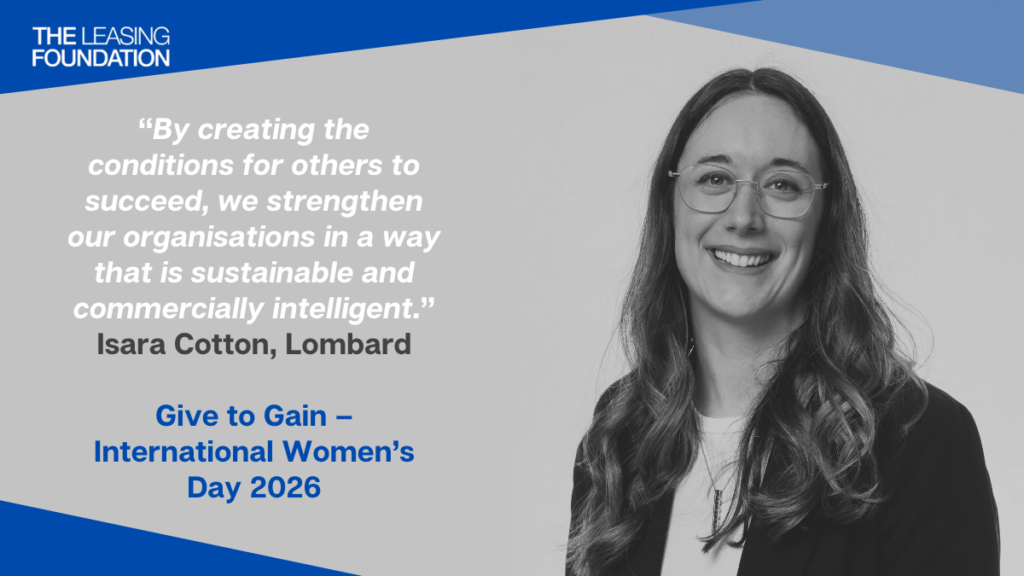
To ensure progress is enduring rather than cyclical, leaders need learning agility, critical thinking and the ability to hold paradoxes – recognising that competing truths can both be valid. We also need to resist the pull of self‑preservation. When decisions are driven by fear of scrutiny or a desire to protect the familiar, progress stalls. When decisions are driven by a belief in culture creation and long‑term performance, progress lasts. That’s the essence of Give to Gain: by creating the conditions for others to succeed, we strengthen our organisations in a way that is sustainable and commercially intelligent.
What we ‘gain’ is not just cultural goodwill. It’s healthier teams, more resilient performance and an industry that is prepared for the decade ahead rather than anchored to the one behind us. The opportunity for asset finance is to move from moments to systems, from individual champions to shared responsibility and from inclusion as a standalone initiative to inclusion woven into everyday leadership. There is real power in designing a sector where people thrive not despite the system but because of it.